


Client work · Air Balloon Digital Studio · Art centre
Lemba Cultural Village
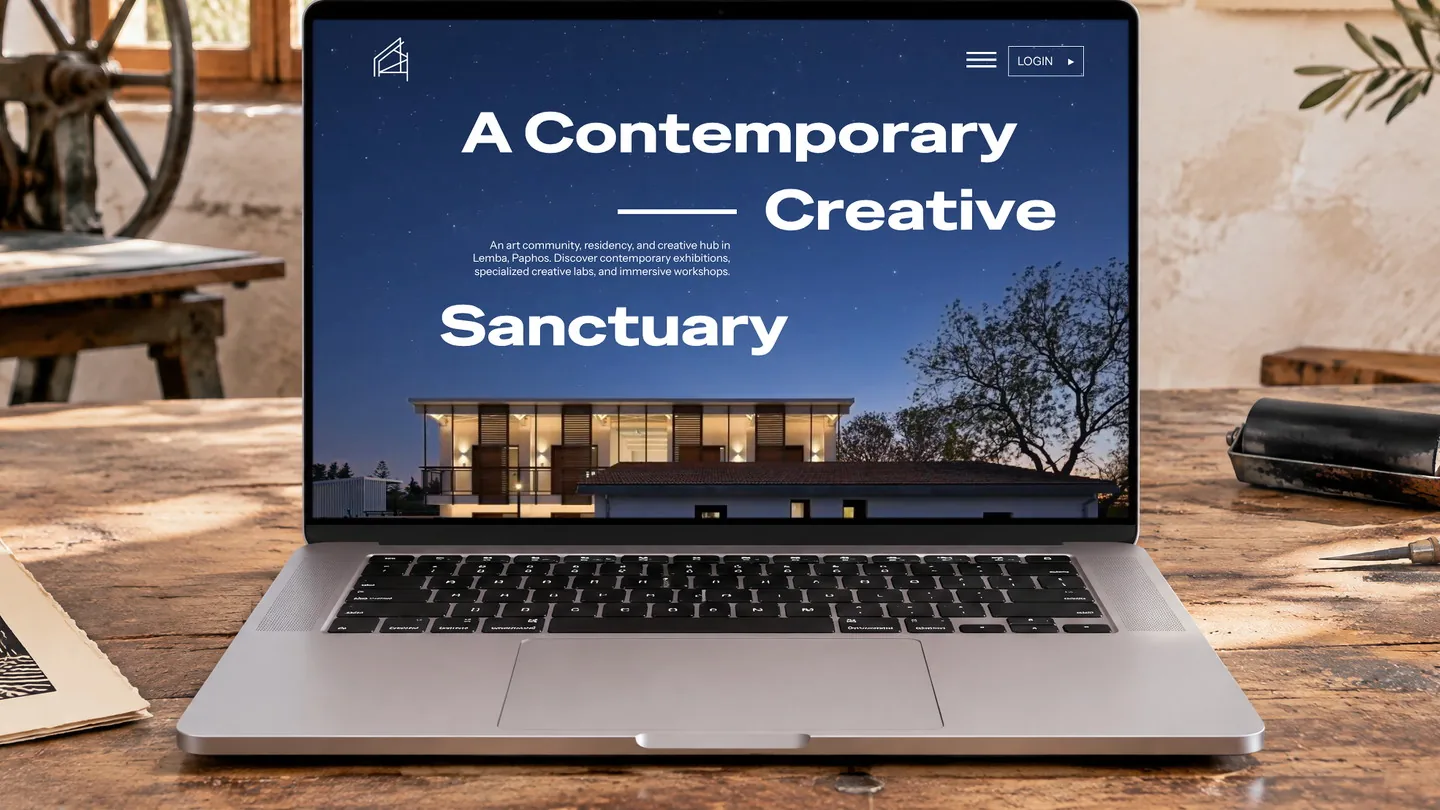
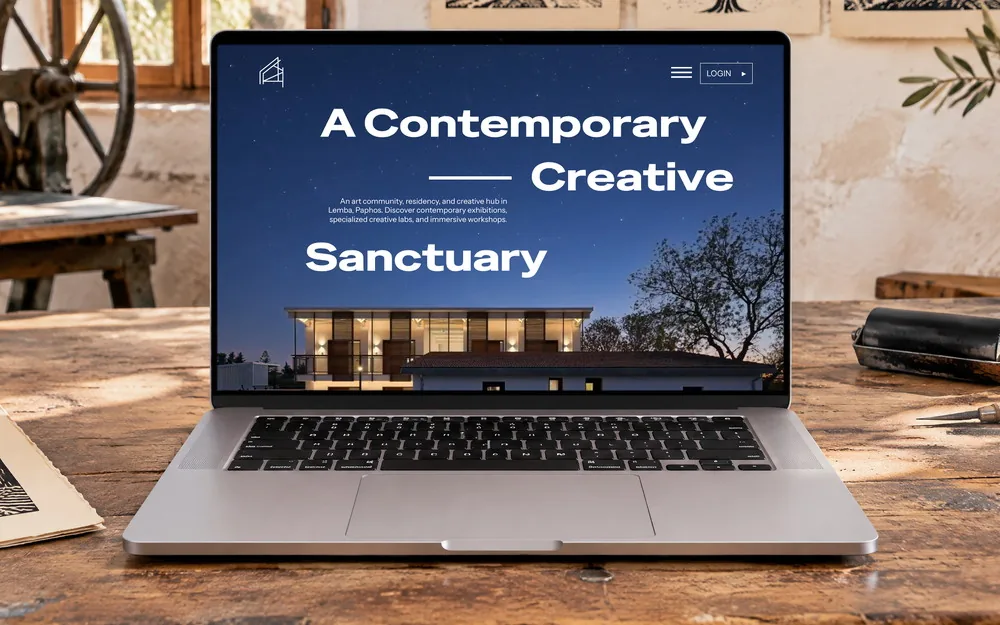
The website of an art centre in Lemba, Paphos, with an art gallery, six studios and labs, workshops, an artist residency and a library. Three different booking systems on one site, card payments, PDF tickets with a QR code that staff scan at the door, and the tools the team runs it with.
The client
A cultural village in Lemba, a few minutes from Paphos: the Petrideios Gallery with its permanent collection, open studios for painting, printmaking and typography, photography, an analog darkroom and a tech lab with a 3D printer and a laser cutter, instructor-led classes for adults, teenagers and children, a self-funded artist residency, and a library that houses an archive of Cypriot art monographs.
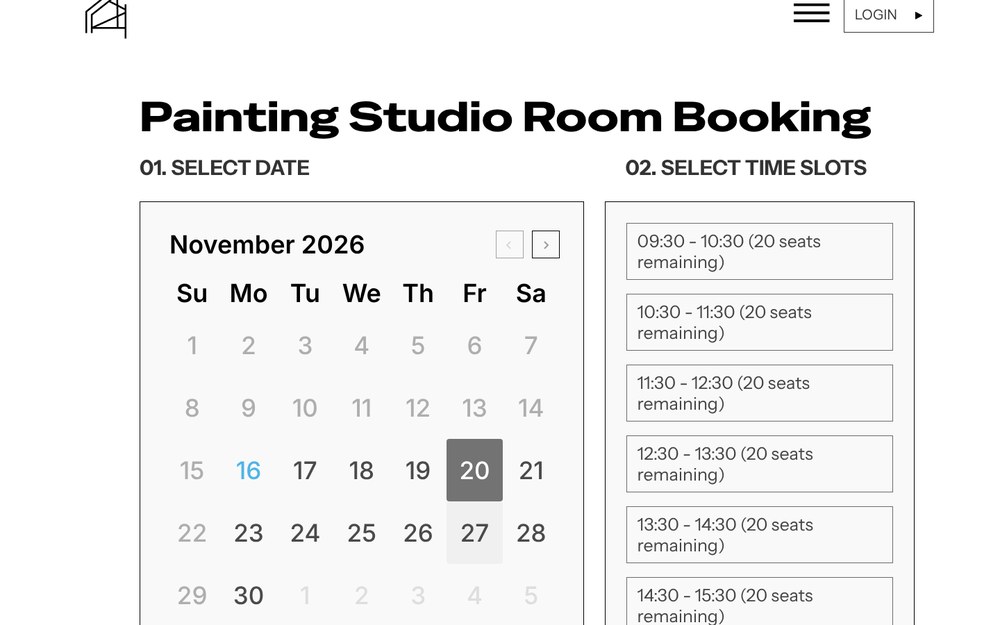
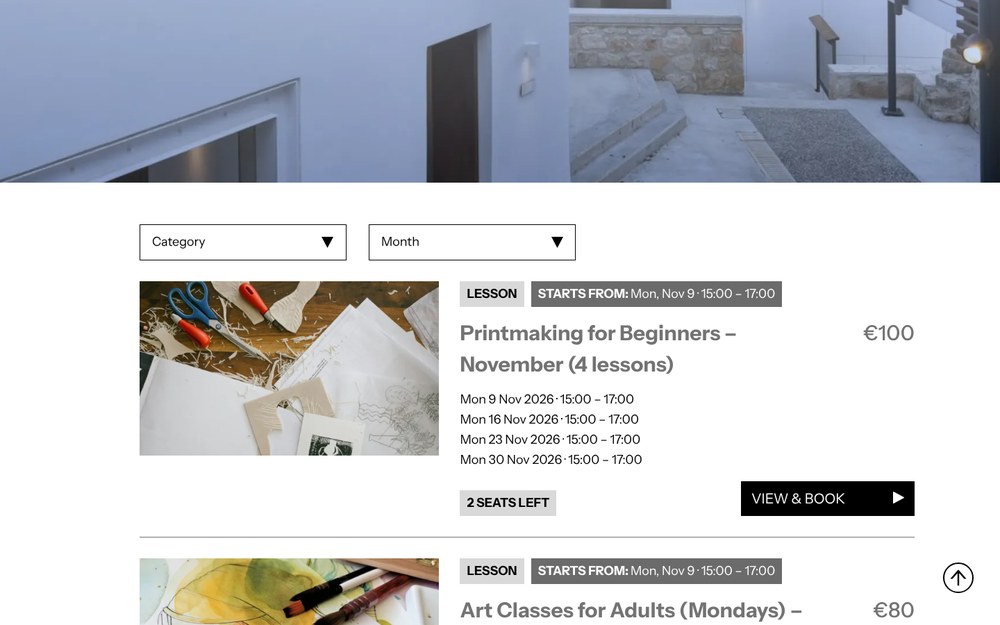
Each of these is sold differently: a gallery visit is a timed ticket for adults, children or students, a studio is rented by the hour, and a course is one booking that covers four to six lessons on fixed dates.
What I built
The design was made in Figma by Stella Nicodemou. I was the main developer: I built it in WordPress and Elementor on a custom theme, and took the booking plugin much further than it came, until the whole centre could be sold, paid for, checked in and managed from one site.
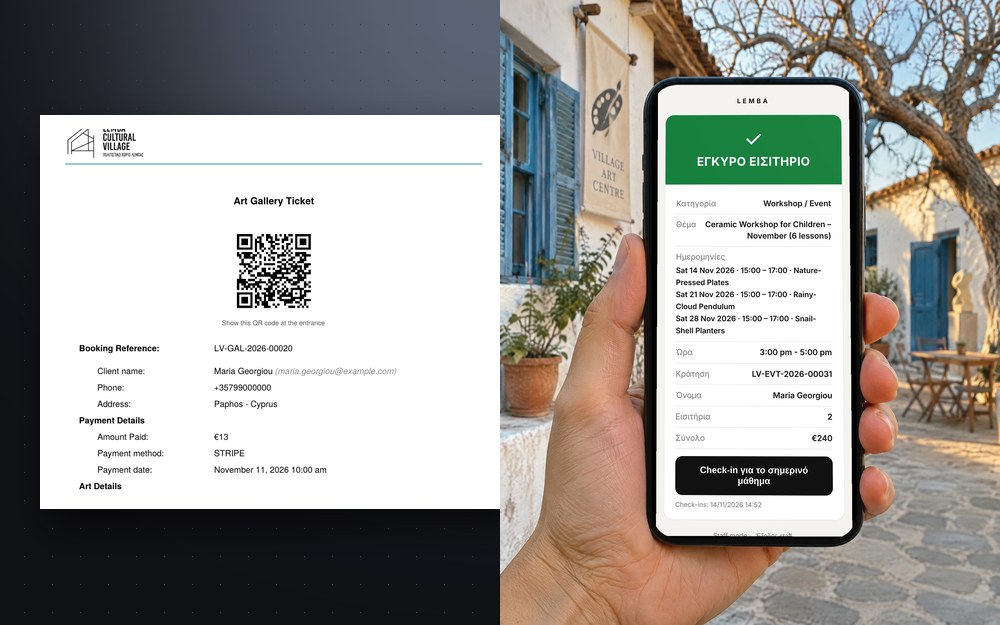
- Three booking systems: gallery tickets in hourly slots with separate seats and prices for adults, children and students; studios and labs booked by the hour, each with its own capacity and hours for every day of the week; and courses where one booking covers every lesson, with the lesson dates and topics listed on the ticket.
- Payments: Stripe Checkout in euro only, refunds from the admin, and booking references that say what was booked (
LV-GAL,LV-LAB,LV-EVT). Taken from test mode to live with the client’s own Stripe account. - Tickets with a QR code: every PDF ticket carries a signed QR code. Anyone who scans it sees only whether it is valid; staff unlock the full view with a PIN once per phone and check people in at the door, and a second scan says when the ticket was already used.
- My Bookings: customers see their bookings, cancel within the allowed window, and open their ticket again at any time, regenerated with the QR code if it was issued before.
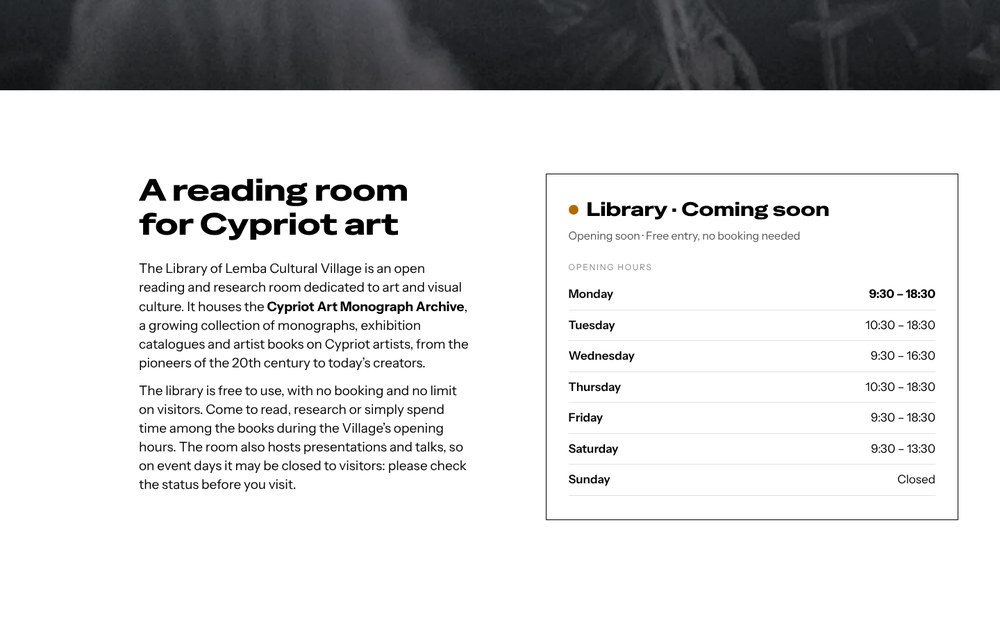
- Library and open call: a status box that says whether the library is open right now, with the days it is closed for events set by the staff, and an always-open call for art books, printed by post or digital by upload.
- Host an Event and the residency: a page with the spaces and an enquiry form for event hire, and a residency application with CV and portfolio uploads.
- For the team: settings in Greek for the ticket PIN and library closures, three step-by-step video tutorials with arrows for bookings, hours and prices, and coupons, and a training session at launch.

The decisions that shaped it
A QR check-in that needs no login
The staff at the door should not need a WordPress account to check a ticket. So the QR code holds a short signed token, and the page it opens always answers in two levels: anyone sees only valid or not valid with the date, while the person, the ticket counts and the check-in button appear only after the staff PIN. The PIN is asked once per phone and remembered for six months; changing it in the admin signs every phone out, and wrong tries are limited. A course is checked in once per lesson day, so the team can see who came to which lesson.
Cost: one shared PIN instead of a personal account for each person, so the log says when a ticket was used but not by whom.
The QR encoder is written in the site itself
The tickets are made as PDFs on the server. Rather than send every booking code to an outside QR service, I wrote the encoder in PHP: byte mode, error correction level M, versions one to six, with the mask chosen by the standard penalty rules, drawn as an image straight into the PDF. Before it went on a ticket, I decoded test codes of every size and all eight masks with a reference decoder, and every one read back exactly.
Cost: code to own instead of a library, and it stops at version six. A ticket link is far shorter than that, so it never comes close.
Built on the plugin, not instead of it
The booking plugin had one schedule for every day. The gallery needed different hours on different days, closed on Sundays, open to 2099. Instead of rewriting it, the schedule holds every slot of the week and the theme tells the calendar which ones belong to each day; on the way I fixed the date bug that had stopped long schedules after about twenty days. Every change to the plugin is written down in a patch file, so an update cannot silently undo it.
Cost: the rule for each day lives in two places, the data and the theme, and has to change in both.
Live status on a cached site
The site sits behind a full-page cache, so a page cannot say “open now” from the server: it would be stale minutes later. The library box carries the opening hours and the closures as data and works out the status in the visitor’s browser, in Cyprus time. Saving a closure in the admin clears the cache, so the change shows at once.
Cost: without JavaScript the box shows the opening hours but not the live status.
The result
Live at lemba.art, with bookings and payments on the client’s own Stripe account, and the gallery and the library ready to open from the admin when the centre is.
Have a project in mind?
I take on client websites, web apps, and product builds across Cyprus and Greece.