
Case study · Event platform
PicMeUp
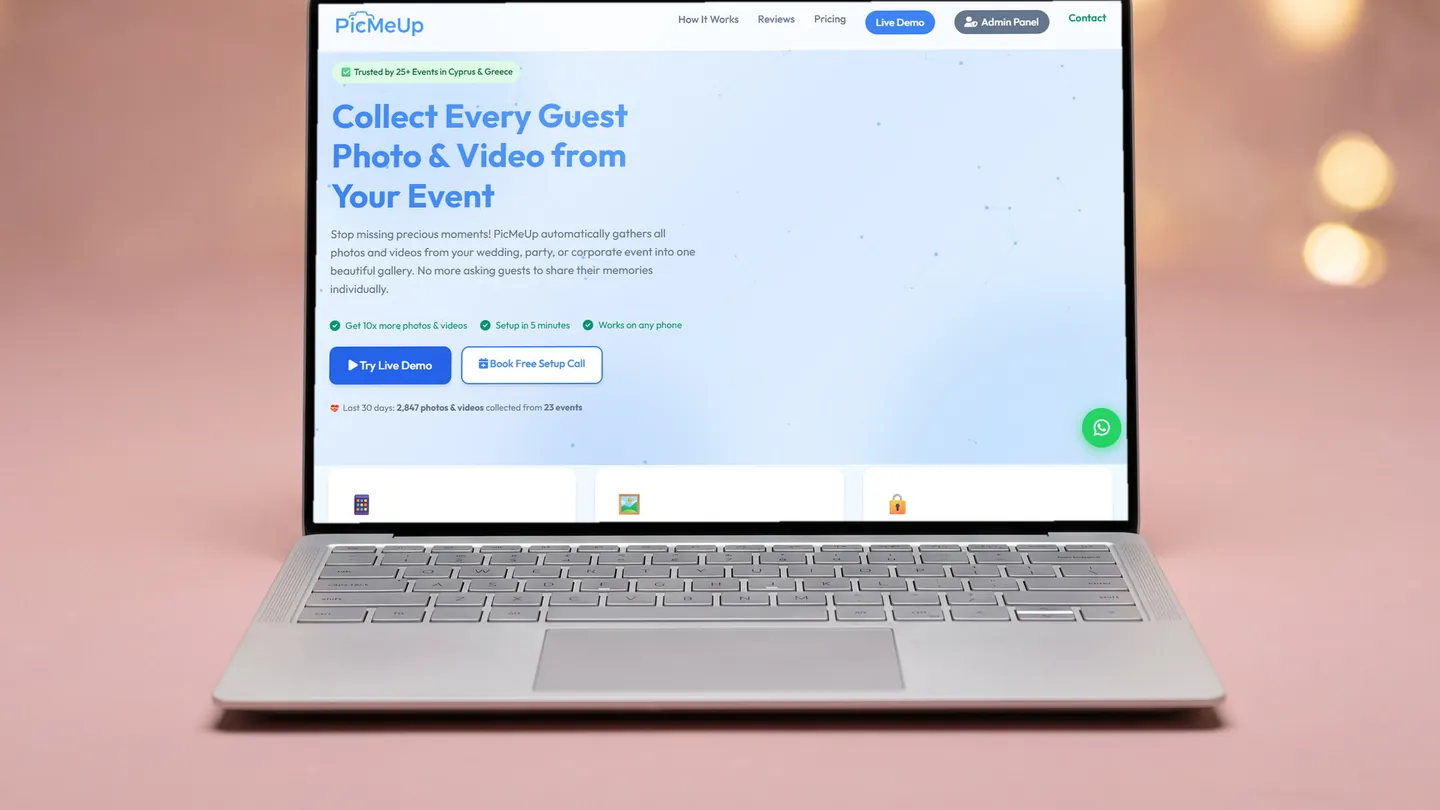
Every guest's camera roll, pooled into one live gallery. No app, no account, no chasing people for photos after the event.
The problem
At the end of an event, the best photos are on two hundred phones and nowhere else. Someone starts a group chat, a few people post, the resolution is destroyed, and most of it is never shared at all.
Venues feel this differently from guests. For a café or an event organiser, those photos are the only genuine record of the night, and the only marketing material that does not look staged — and they never get their hands on it.
The goal
One place per event where a guest can put a photo in and see everyone else's, in the moment. The entire product is judged on a single number: how many seconds from wanting to share to having shared.
That framing kills most feature ideas immediately. Anything that adds a step — installing something, signing up, waiting for approval — costs more than it adds.
What I built
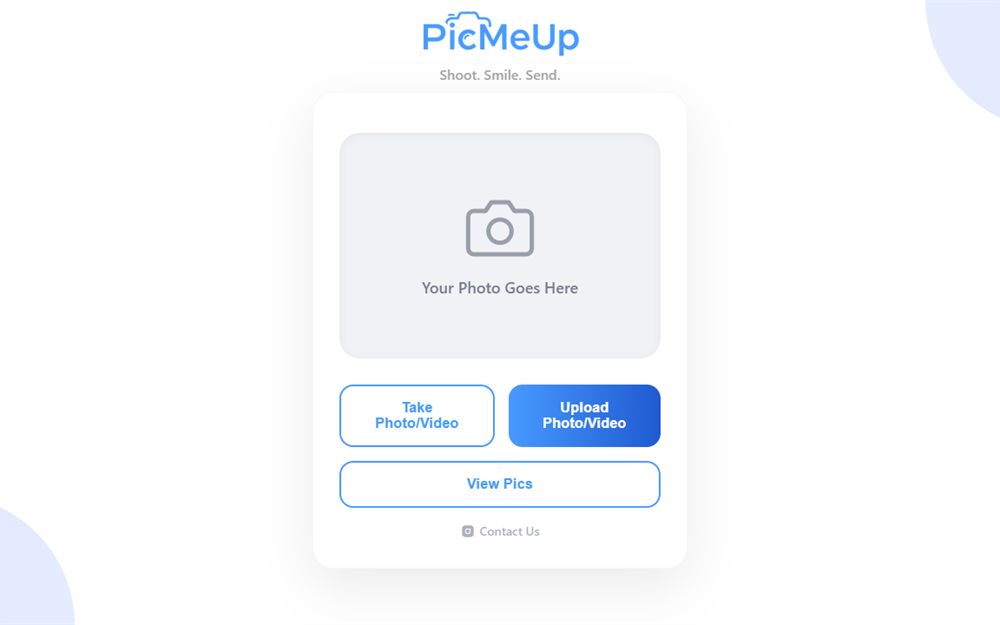
- Instant guest upload from the browser, straight into the event's gallery.
- A live shared feed that updates as photos arrive, so people watch it fill up rather than refreshing.
- Per-event galleries, so a wedding, a café night and a conference stay separate.
- Mobile-first everything, because every guest arrives on a phone.
- Firebase Storage for the originals, with the Realtime Database holding the feed.
Technical decisions
Realtime Database for the feed, not Firestore
The feed is a stream of small, append-only events with a lot of simultaneous listeners and almost no querying. That is what the Realtime Database is shaped for, and its latency on a simple subscribed list is hard to beat when a room full of people is watching the same view.
Cost: no rich queries and a weaker rules language than Firestore, so anything resembling search or filtering has to be designed around rather than queried for.
No accounts for guests
A guest at a wedding will not create an account. Access is by event, not by identity, so the path from opening the link to uploading is a single screen.
Cost: without identity there is no natural owner for a photo and no built-in abuse control, so moderation and access scoping have to be handled at the event level instead.
The browser is the app
A native app would have meant an install prompt at the exact moment someone wants to share, plus two stores to ship through. The web version reaches every guest on every phone through a link.
Cost: no camera roll integration or background upload, and image handling has to work within whatever the mobile browser allows.
Where it has run
PicMeUp has been used at cafés, private events, and integrated into the official Cyprus Forum website, another project on this site — the photo sharing on that event's site is this platform.
Building both sides of that integration was the useful part: the product had to be embeddable in someone else's site rather than only working as a destination of its own.
PicMeUp transformed how we engage with customers at our café. Guests could instantly share and view event photos, the real-time upload was flawless, and Constantinos delivered a professional, reliable solution that exceeded our expectations.
Have a project in mind?
I take on client websites, web apps, and product builds across Cyprus and Greece.
Start a conversation